Home › Sewer Line Replacement Cost
What drives sewer line replacement cost
Sewer quotes vary more than almost any other plumbing job. Length, depth, what's on top of the line and the method chosen account for most of it.
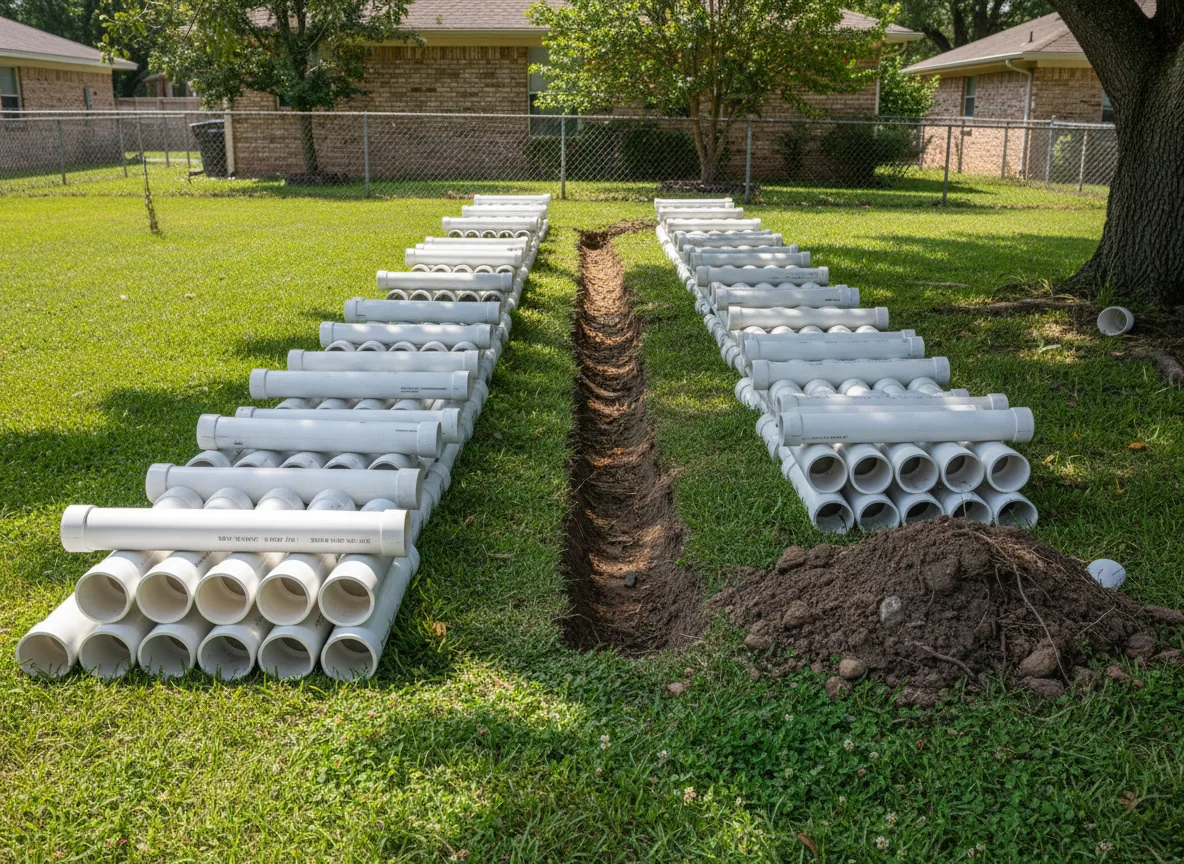
Sewer quotes vary more than almost any other plumbing job. Length, depth, what's on top of the line and the method chosen account for most of it.
Length of the run being replaced. Depth, because deeper means more excavation and often shoring. What sits above the line — turf is cheap to restore, a concrete driveway or a mature oak is not. And method, with trenchless costing more per foot but requiring far less restoration. A quote that looks wildly out of line with the others usually differs on one of these four, not on the contractor's margin.
If the camera shows one failed joint in an otherwise sound line, a spot repair is the proportionate answer. If it shows a line with multiple failures, widespread root intrusion and degraded pipe throughout, repeated spot repairs become more expensive than replacing the run. Ask which the footage actually supports, and ask to see the basis for it.
Permits, which sewer work in Fort Bend County generally requires. Excavation and backfill, with proper compaction — poorly compacted backfill settles and you notice it as a trench-shaped dip across the lawn a year later. The pipe and fittings. A cleanout installed if there is not one. Restoration, specified: 'restore driveway' should say what thickness of concrete over what base. Inspection after the work. And the warranty, in writing, on both the pipe and the labour.
Make sure every bid covers the same length of line and the same method, or the numbers are not comparable at all. Ask each contractor what the camera showed and have them point to it. Be wary of a bid that is dramatically lowest and vague about restoration, and of one that arrives immediately after a free inspection without footage you were shown. For a job at this cost, a second opinion with its own camera run is cheap insurance.
Generally the homeowner owns the line from the house to the connection point and the utility owns it beyond. Exactly where that boundary sits varies by jurisdiction, so confirm it before agreeing to work — it occasionally moves a large cost off your side.
Standard homeowner policies usually exclude the line itself. Some carriers offer a service line endorsement that covers it. Check whether you have one before assuming either way.
For a while, and for some lines that is a rational maintenance choice. Once the cutting interval shortens to a year or less, the cumulative cost usually passes the cost of fixing it properly.
Send the details and we'll route it to a licensed local contractor.